
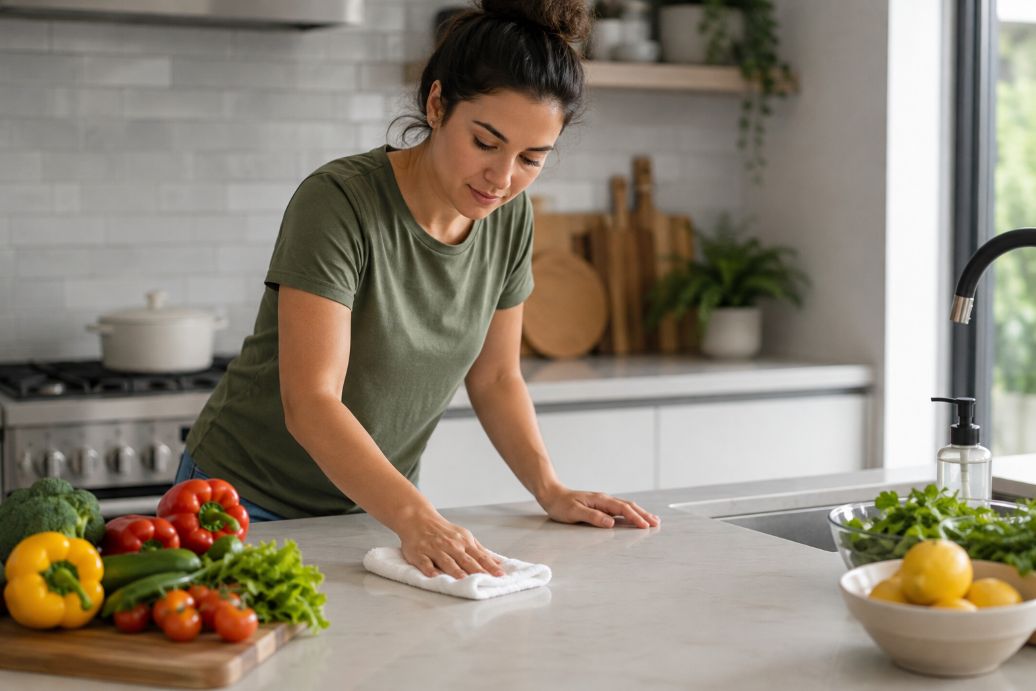
Clean food-preparation surfaces are a basic part of safe kitchen management because counters, utensils, appliances, hands, and ingredients can all become routes for transferring microorganisms. The U.S. Food and Drug Administration advises consumers to keep food-contact surfaces clean and to separate raw foods from foods that are ready to eat. Starting weekly meal preparation with an orderly kitchen therefore has a practical purpose beyond appearance.
For households already balancing work, family responsibilities, shopping, and cooking, preparing the entire kitchen before a long meal-prep session can feel like another job. Some families may occasionally use a cleaning service for deeper or recurring household work, while handling ordinary food-preparation hygiene themselves. Either way, the useful principle is the same: begin cooking with enough clean space, equipment, and organization to work efficiently.
Step 1: Clear the Surfaces You Actually Need
Start with the counters rather than immediately reaching for cleaning products. Put away mail, shopping bags, unused appliances, dishes, and unrelated household items. Meal preparation often requires several working zones, including an area for ingredients, a cutting area, and somewhere to place finished food before storage.
Clearing clutter also makes surfaces easier to clean properly. The U.S. Department of Agriculture emphasizes cleaning hands, utensils, cutting boards, and surfaces as part of its food-safety guidance. A counter crowded with unrelated objects makes that routine unnecessarily difficult.
Step 2: Clean Before You Start Chopping
Once the counters are clear, clean the surfaces used for food preparation. Pay attention to cutting boards, sink surrounds, cabinet handles, refrigerator handles, and other frequently touched areas.
Cleaning and sanitizing serve related but different purposes. The U.S. Food and Drug Administration explains in its food-safety guidance that cleaning removes food residue and other material from surfaces, while appropriate sanitizing practices reduce microorganisms to safer levels. Following product instructions is important when household sanitizers are used on or around food-contact surfaces.
Hands matter just as much as counters. The Centers for Disease Control and Prevention recommends washing hands with soap and water at important stages of food preparation, including before preparing food and after handling items that may contaminate the hands.
Step 3: Deal With Grease Before Cooking Adds More
Grease around the stovetop, backsplash, range hood, and nearby surfaces tends to become more difficult to manage when another large cooking session is added on top of it. Removing grease, crumbs, spills, and other food residue is also part of keeping the kitchen clean and less attractive to pests, since food debris can provide readily available food sources for some common household pests. Cleaning these areas before meal preparation creates a more comfortable workspace and makes new spills easier to identify and address as they happen.
Check the microwave and other frequently used appliances at the same time. Dried food inside an appliance can produce odors and create extra work later. A quick inspection before cooking can prevent several small cleaning jobs from accumulating at the end of the session.
Step 4: Empty the Bin and Prepare for Waste
Weekly food preparation can generate vegetable peelings, packaging, cans, wrappers, and other waste quickly. Starting with an overflowing bin means the cooking area becomes cluttered almost immediately.
Empty rubbish and recycling containers beforehand, replace liners, and keep the containers accessible without placing them directly in the main food-preparation zone. This simple step reduces interruptions because waste can be removed as ingredients are prepared rather than piling up beside cutting boards.
Step 5: Organize Ingredients Before Cooking
Meal prep becomes easier when ingredients are grouped before heat is turned on. Take out the vegetables, grains, proteins, seasonings, containers, and utensils needed for the recipes planned for the week.
Food safety should shape this organization. The U.S. Department of Agriculture recommends keeping raw meat, poultry, seafood, and eggs separate from foods that will be eaten without further cooking. Separate cutting boards, plates, or preparation areas can reduce the risk of cross-contamination.
Refrigerated ingredients should also spend as little unnecessary time at room temperature as practical. The USDA advises refrigerating perishable foods promptly and keeping refrigerators at 40°F, or about 4°C, or below.
Step 6: Clean as You Move From One Recipe to Another
Waiting until every meal is finished can leave the kitchen covered with bowls, knives, packaging, spills, and pans. A cleaner approach is to reset small parts of the workspace throughout the session.
Wash or move used utensils when they are no longer needed. Wipe spills promptly, particularly after handling raw ingredients. Put seasonings back after use and transfer finished food into suitable storage containers. These short resets keep the available workspace from gradually disappearing.
Step 7: Finish With the Floor and Final Touchpoints
Floors are best handled near the end because chopping, unpacking, and transferring ingredients can send crumbs and debris downward. Sweep or vacuum first, then clean the floor using a method appropriate for its material.
Finish by checking high-touch areas such as appliance handles, taps, cabinet pulls, and switches. The goal is not to make the kitchen look untouched. It is to return it to a manageable condition so the next meal does not begin with yesterday’s mess.
Keep the Kitchen Ready Between Meal-Prep Days
A weekly deep reset becomes much easier when smaller tasks happen throughout the week. Wiping counters after cooking, washing cutting boards promptly, dealing with spills when they occur, taking rubbish out regularly, and returning ingredients to their proper places can prevent minor messes from becoming major cleaning projects.
A cleaner kitchen cannot shorten every recipe, but it can remove avoidable obstacles. Clear counters provide room to work, organized ingredients reduce searching, and regular cleaning supports safer food handling. Whether a household manages every task independently or occasionally brings in outside help, maintaining the space between cooking sessions is what makes the next round of meal preparation easier to start and simpler to finish.